Thursday, March 5, 2026

Susan Choi and Katie Kitamura among authors longlisted for Women’s prize for fiction


Susan Choi and Katie Kitamura among authors longlisted for Women’s prize for fiction

Sixteen novels are in contention for the £30,000 award, now in its 31st year, with settings ranging from climate-ravaged islands to a near-future Kolkata


Emma Loffhagen
Wed 4 Mar 2026 


Katie Kitamura, Susan Choi, Kit de Waal and Lily King are among the authors longlisted for this year’s Women’s prize for fiction.

Awarded annually and now in its 31st year, the prize comes with £30,000, and is one of the most prominent accolades for women’s writing in the English language. The 16-strong list features a selection of novels that range in setting from climate-ravaged islands to a near-future Kolkata, and from 1970s Birmingham to East Berlin on the brink of reunification.

Choi was longlisted for her Booker-shortlisted novel Flashlight, a sweeping historical family saga propelled by a father’s disappearance, its trauma rippling across generations and geographies. Ranging from North Korea to Indiana, the US writer’s sixth novel is “geopolitically bold” and full of “confident chaos”, writes Beejay Silcox in her Guardian review.

US writer Kitamura’s fifth novel Audition, also shortlisted for the 2025 Booker prize, follows an unnamed actor who is confronted by a younger man who claims to be her son, and probes the role that acting and performance play in our lives.

De Waal’s The Best of Everything marks a second nomination for the author, who returns with the story of a working-class Caribbean woman in 1970s Birmingham, an “understated” and “beautifully rendered” tale, writes Colin Grant in his Guardian review.

King was longlisted for her sixth novel Heart the Lover, following a university campus love story into mid-life, which was praised by Rebecca Waitas “vivid, moving and witty”.

Virginia Evans was selected for The Correspondent, which tells the story of a woman in her 70s through her letters to friends, children, loved ones and strangers.

Chaired this year by the former Australian prime minister Julia Gillard, the judging panel has chosen a longlist she describes as “international in scope and setting”. The list features nine titles from independent publishers and seven debuts.

Many of the novels on the longlist grapple with the aftershocks of political upheaval. In Paradiso 17, Hannah Lillith Assadi follows a man living in exile, moving from Palestine to Kuwait then Italy and New York. The Others by Sheena Kalayil returns to the final days of the Berlin Wall, tracing how seismic historical change filters into the private lives of three friends. And in A Beast Slinks Towards Beijing, Alice Evelyn Yang draws on folklore and elements of magical realism to examine colonial brutality and trauma.

Environmental breakdown underpins other longlisted titles. Wild Dark Shore by Australian author Charlotte McConaghy takes place on an isolated island shaped by climate collapse, while Megha Majumdar’s A Guardian and a Thiefimagines a near-future Kolkata hit by flooding and famine.

Several debut novelists turn their attention to mothers and children. The Benefactors, Wendy Erskine’s novel set in contemporary Belfast, follows allegations of a sexual assault, exploring tensions of class, status and anxiety about the future. Marcia Hutchinson’s The Mercy Step spans the first 11 years of a rebellious young girl’s life in 1960s Bradford, and in Dominion, Addie E Citchens examines the pressures placed on Black mothers.

Completing the longlist are Lucy Apps’s debut Gloria Don’t Speak, about a 19-year-old woman with a learning disability, Elaine Castillo’s Moderation, which features a content moderator who falls for her boss, and Kingfisher by Rozie Kelly, about an academic who also becomes fixated on his colleague.

Gillard is joined on this year’s judging panel by the poet and novelist Mona Arshi, the author and broadcaster Salma El-Wardany, the writer and comedian Cariad Lloyd and the DJ and author Annie Macmanus.

“These 16 books masterfully demonstrate the power of fiction to examine the messy business of being human,” Gillard said. “From climate change to artificial intelligence, they navigate the issues of our time with urgency and purpose, they immerse us in environments and experiences that are sometimes like our own, but more often are radically different, and they explore identities and perspectives that are often ignored or forgotten, amid those inherently universal and recognisable.”

A shortlist of six will be announced on 22 April, with the winner revealed on 11 June at a ceremony in London, along with the winner of the Women’s prize for nonfiction.

Last year’s Women’s prize winner was Yael van der Wouden for her debut novel The Safekeep, exploring repressed desire and historical amnesia in post-second world war Dutch society. Previous winners of the prize also include Barbara Kingsolver, Maggie O’Farrell, Kamila Shamsie and Zadie Smith.


  • To browse all books in the Women’s prize for fiction 2026 longlist, visit guardianbookshop.com. Delivery charges may apply.

 This article was amended on 5 March 2026. Audition is Katie Kitamura’s fifth novel, not her third as stated in an earlier version.


THE GUARDIAN


Hans Christian Andersen / The Wild Swans XLISTO 013

THE 

WILD SWANS 


A fairytale by Hans Christian Andersen


Far away in the land to which the swallows fly when it is winter, dwelt a king who had eleven sons, and one daughter, named Eliza. The eleven brothers were princes, and each went to school with a star on his breast, and a sword by his side. They wrote with diamond pencils on gold slates, and learnt their lessons so quickly and read so easily that every one might know they were princes. Their sister Eliza sat on a little stool of plate-glass, and had a book full of pictures, which had cost as much as half a kingdom. Oh, these children were indeed happy, but it was not to remain so always. Their father, who was king of the country, married a very wicked queen, who did not love the poor children at all. They knew this from the very first day after the wedding. In the palace there were great festivities, and the children played at receiving company; but instead of having, as usual, all the cakes and apples that were left, she gave them some sand in a tea-cup, and told them to pretend it was cake. The week after, she sent little Eliza into the country to a peasant and his wife, and then she told the king so many untrue things about the young princes, that he gave himself no more trouble respecting them.

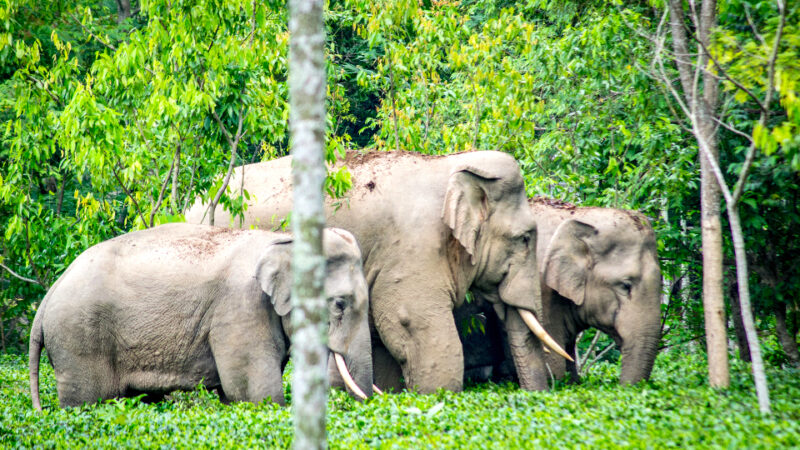
The elephant whisperer of Nepal


Image by ICIMOD via Nepali Times. Used with permission.

Image by ICIMOD via Nepali Times, used with permission.


The elephant whisperer of Nepal


This article by Biraj Adhikari, a Research Fellow of ecosystem services at ICIMOD, was first published in Nepali Times. A shortened and edited version is republished on Global Voices as part of a content-sharing agreement.

Wednesday, March 4, 2026

Rumaan Alam / ‘Reading JD Salinger now is like running into that particular ex at a cafe’


The 

Books

 0f my 

life


Rumaan Alam: ‘Reading JD Salinger now is like running into that particular ex at a cafe’

This article is more than 5 months old

The US author on his early love of Salinger’s Catcher in the Rye, the genius of Judy Blume, and finding perfection in Agatha Christie and Gustave Flaubert


Rumaan Alam

Friday 5 September 2025


My earliest reading memory
I recall lying in the bath, age seven or eight, reading the final page of Judy Blume’s Starring Sally J Freedman As Herself, then turning to the novel’s opening and beginning again. Memory is untrustworthy, but Blume is a genius who has that effect on her reader.

My favourite book growing up
We’re always growing up; we’re always choosing a new favourite. For me, once, this was Louise Fitzhugh’s Harriet the Spy. Later I’d have said JD Salinger’s Nine Stories. Later, still, John Cheever’s Collected Stories, Lorrie Moore’s Self-Help, Thomas Mann’s The Magic Mountain, my favourite changing as I did. Maybe I’m finally old enough to understand that favourite is impossible to designate. Or maybe I’d say my current favourite is Don DeLillo’s Underworld.

The book that changed me as a teenager
I encountered Salinger at 13. I began with The Catcher in the Rye (as most do) and read through his (too small) oeuvre. I wrote bad stories ripping him off; he somehow made me believe that I could be a writer, too.

The writer who changed my mind
I think reading William Faulkner – I’d have been 16 or so – was the first time I understood that the pleasure one finds in a book might not be in its ease. I think that’s what I most loved (and still value!) about the favourites of my childhood: being swept up in story and character and action. Faulkner showed me that there could be delight in wrestling with a sentence, a pure joy in language itself, a thrill in being challenged and confused by a work of art.

The author that made me want to be a writer
My early writing education was just mimicry. And the first writer I remember imitating was Agatha Christie. How I wanted to write a perfect whodunit, with a stately home, a party of interesting people and a dead body. That’s easier said than done.

The authors I come back to
There’s no shortage of these – Don DeLillo, Anita Brookner, Patrick Modiano, Philip Roth, Willa Cather. These are but a few of the writers I can go back to and be thrilled by whenever I need.

The books I could never read again
My relationship with Salinger was like a heated youthful romance. Reading his fiction now is a bit like running into that particular ex at a cafe. I’d rather remember Salinger’s work as meaningful to my 14-year-old self than actually read it as I tiptoe toward 50.

The book I discovered later in life
I’m all for discovery whenever it happens. Books have no sell-by date. They’re always there, waiting for their readers, and it’s silly to carry around a sense of embarrassment for not having got to Moby-Dick or what have you. This summer I read Gustave Flaubert’s Madame Bovary for the first time. A perfect novel! Why did I wait so long? It doesn’t matter.

The book I am currently reading
Gertrude Stein’s The Autobiography of Alice B Toklas. My first time with Stein, and I’m reading it slowly while lying on the beach; a luxury, a joy.

My comfort read
Comfort can be different things. In times of stress, I might want something funny, or I might want something that mirrors the tumult I’m feeling in life. The comfort derives, in large part, from knowing that it’s new, that I’m in search of something, that I might discover something other than what I’m looking for. That’s what I love about books – a journey without a map.

THE GUARDIAN